Huwebes, Oktubre 26, 2017

THE STORY OF FIVE MONTHS - A PERSPECTIVE AFTER 31 YEARS (7)

CHAPTER 7
The Beauty Pageant Answer

It was my turn to go to Manila to attend to an examination and interview for my residency training. I was to cross and climb towards Salegseg. Passing through the bridge was a piece of cake. I gave myself a thumbs up. Then the ascent came. Reaching the mango tree near Liglig village, I took a stop and sat down. But as I felt the urge to urinate, I stood up and urinated. I did not know what happened next. I woke up lying down under the tree with my fly open. I realized I had orthostatic hypotension. A sudden loss of blood in my brain occurred when I hurriedly stood up caused the fainting spell. I laughed at the silliness of the situation. I looked around and it was good there was no one. I looked at the ravine and thanked God that I did not fall into that abyss. I might have met death that time.

From the FB page of Mr. Gerry Oribello


I continued my walk towards the town center. Upon reaching the military outpost, I was told the military commander wanted to talk to me. As I met the man face to face near the basketball court where they were playing I sized him up as he sized me up. He was not the commander we met during the town meeting. He was younger, brusque and with an air of arrogance. He looked at me and looked at my backpack. I thought he was going to inspect the bag.  However, with authoritative curiosity asked me, “What are you doing there?” I responded in a fatigued and yet polite manner, “ We were doing community medicine.” He looked at me in a bewildered way and replied rhetorically, “Do you think that will work?” Despite my lingering doubts, I answered, “It will work. As long, as you have commitment and dedication. As long, as you keep your faith in humanity. Everything will work out just fine.” He looked at me in the eyes, then he stretched his arms to shake my hands. I stretched my arms towards his hands and I clasped his strong military hands. 


When I met members of my foster family, they told me that during the encounter and the bombardment of a part of the village, someone told the commander that the doctors were very near the area. Allegedly, he answered, “Let them be bombed!” I don’t know. Despite the brazenness, brusqueness and intimidating attitude of the military commander, I was able to acquit myself exceedingly well because of my beauty pageant answer.

from clipart-library.com

At the town center, Salegseg, while resting at the house of Manong Karyo, I got to meet a lot of people asking me to buy that and buy things not easily procured in Balbalan. Someone even suggested that I buy a lot of personal things and sell them to those who wanted it. They told me to be the capitalist and they will be the seller. Wow, shades of entrepreneurship in Kalinga. I was quite surprised they did not ask Chita to buy those things for them. 

So my Manila stint was not only to attend to professional concerns but a travel to Divisoria where I could buy the cheap and sturdy goods I was requested to. I was back to the grueling travel to Tuguegarao, Tabuk and to Balbalan. Back in Balbalan, at the Balantoy area, there seem to be a lot of activity in the area most especially at the Balbalan Agro-Industrial School. There were hushed tones inside the vehicle but since it was in Salegseg, I did not fully understood what they were saying. Suffice to say, there is an important meeting in that area. As the vehicle approached the town area, I  was requested to go down at the Western Kalinga District Hospital. Chita and Rizel were there waiting for me. I saw Manang Leonor, the hospital cashier who asked me to buy girls' things and I gave her requests. I could the brightness of their smiles as I distributed the goods they have asked for. I learned later on that Dr. Olidan invited us to have lunch in their house, that’s why Chita and Rizel were there waiting. 


Dr. Olidan lived in a hill overlooking valleys and other hills. Her yard is the epitome of a farm - teeming with chicken, goats and she has backyard piggery. Dr. Olidan’s piggery might be the forerunner of the “No Smell Piggery” projects nowadays as very faint odor is emitted from her pig pens. Dr. Olidan lived in Balantoy and is very near the Balbalan Agro-Industrial School (BAIS). While going to Dr. Olidan’s house, we had to pass by the BAIS and my eyes just popped out. I saw a man, about 5’4” in height, unassuming, docile persona who was carrying a gun. It was the same man I saw in the newspaper before I went to Balbalan. We were ask to get down from our vehicle. And here I am, faced to faced with the leading revolutionary of the Cordillera. The handshake and the enigmatic smile were enough. I took a mental picture of the event as we did not have cameras to document the event. Had this occurred in contemporary times, I would have that selfie with the Man of the 80s - Father Conrado Balweg. But my prevailing sentiment during that time was that he was an ordinary man like us. He like us had the capability to dream. And his dream is to emancipate the people of the Cordilleras from extreme poverty. Kalinga-Apayao during that time is the second poorest province in the country.


Our trip to Dr. Olidan’s house was capped with a meal of the quintessential red rice, pinikpikan and the etag. Pinikpikan is a chicken dish in the Cordillera. It is prepared by beating the chicken with a stick prior to cooking. The beating bruises the chicken's flesh, bringing blood to its surface, which is said to improve the flavour after cooking. Etag or itag is salted meat, cured and aged underground in an earthen jar. The flavor is comparable to blue cheese but is much oilier and flavorful after it's cooked. While enjoying our meal, we had a good discussion of what is the local food fare of the Kalingas with regards to chicken and pork meat. We were told that Pinikpikan and etag are Mountain Province in origin. Dr. Olidan’s husband is an Anglican Minister originally from Sagada. According to Dr. Olidan, the Kalingas loved chili-based food. They cook their chicken in “sinilian” (full of chili) fashion. The chicken is shredded, minced with citrus leaves (calamansi, pomelo or orange) and it is fried in boiling coconut or vegetable oil.


 Another way of cooking their chicken is by stewing it. It is sautéed in garlic, onions and ginger. Then they let the stew boil until the meat becomes soft. They place sayote or green papaya and put some available vegetable leaves. To put a sting to their stewed chicken, they put a spoonful of red chilies in it. 


There is also a similar recipe to the “laing” in the Kalinga food fare. They call it pinatan-atang. It is made up of gabi leaves, coconut milk, ginger, garlic and salt. These are boiled into softness and it is again mixed with plentiful chilies. Meat whether in itag form or not, dried fish or broiled or fried fish are included in the mixture.  I have encountered this in Fiji. However, they use the whole gabi leaves to wrap fish , chicken or meat which were mixed with minced garlic, onions and ginger as well as salt. They are cooked in freshly expressed coconut milk known to us Filipinos as “kakang gata.” They call this recipe in Fiji, palusami. 


We can’t forget our foster sister’s cooking of the inandila ( pronounced as inanchila). Manang Adni perfectly cooks this delicacy in which she said, the preparation was a community endeavor. Inandila is a rice cake delicacy made of the famous Kalinga glutinous rice. It is initially pounded to perfection, then cooked in boiling coconut milk. They wait until the coconut milk curdles but not to the point where the “latik” turns brown. It is rolled into sugar which made it the perfect dessert to any meal.


The inandila - a glutinous rice food fare of the Kalingas. It is very reminiscent of the tikoy of the lowlanders with latik on top.

After the food trip, it was time to expend the extra calories we just had. What better way was to walk down to the valley which we call home - Gawaan. 


Note:

If the pictures are not attributed to a website or a person, it is mine. Those who own the pictures I have used and does not want to appear in this blog, please e-mail me at rqmallari60@gmail.com and I would be more than willing to remove them. Thank you.

Biyernes, Oktubre 20, 2017

THE STORY OF FIVE MONTHS - A PERSPECTIVE AFTER 31 YEARS (6)

CHAPTER 6
Bombed......Scared.....But Unfazed......


After 7 days, we noted that Rocco presented with chills and followed by fever. There is a cycle of the chills and fever. We immediately noted that this might be malaria. We collected blood smears on Rocco and sent it to the Malaria Control Unit of Balbalan. Note that at that time, they say Balbalan is malaria-free. So we  reviewed on the treatment of malaria and since Tetracycline was the only medication in our pharmacy, we gave Rocco that. Interestingly and thankfully, he responded very well and the chills and fever disappeared magically. As a result of this experience, we have asked for first-line drugs against malaria and have included our efforts in the protection of the people against malaria. 


The malarial parasite strikes
Photo taken from idhub.com


Just as Rocco emerged triumphant in his dealing with the malaria parasite, he received a tele-radio message that he was needed for Manila. His sister is badly sick and his presence is needed. We eventually heard that Rocco’s sister died. There is a huge possibility that he may not be able to come back to Gawaan. 

When we went to Salegseg to bid Rocco good tidings for his trip, as we were crossing the hanging bridge, we looked up. We saw one part of the mountain where a concrete cross was erected. I told myself, I am going to climb that mountain with a cross. The group said, we will all climb that mountain in unison. 


The Calvary Cross, Baalbalan, Kalinga
In 1986 it is just a concrete cross on top of the mountain. You have to scale the steep inclination of the mountain inorder to reach it. Now, it has become of a pilgrimage are of sort. They had constructed walkways toward the top.
Photo from FB of Balbalan, Kalinga

I was taken aback with the possibility of Rocco not coming back. Who would not? Out of the three, I was the most fearful among us. But I am also the person in the front-line since I speak one of the languages of the area. Rocco and Chita acted as my security blankets and with Rocco’s absence, I feel my strength was thirty-percent less. But life went on. We continued our clinics and training for the health workers. 

The Gawaan Health Situation as compared to the National Health Situation in 1986


On one sunny day, Chita received a message that she would need to attend to an examination and interview for a pediatric residency training. It was her time to go to Manila and being left alone, I was faced by fear. It was fear by the unknown. 

The absence of my companions probably emboldened some young lads to approach me. They asked if I can do circumcision on them. Well, they asked for it and they had them. I sent someone to the hospital to get at least two minor sets and chromic sutures that I could use. August had become the circumcision month for the Gawaan lads. 


Young lads undergoing the circumcision rites


Chita came back from her examination and interview. She was not alone. She was with Rizel, another classmate of ours who is looking not only for adventure but great meaning in life. She came because she wants to have a meaningful vacation. Initially we were quite wary about Rizel joining us. She is not part of the program and if we were somehow accorded some government protection, that we can’t assure her. But Rizel is one tough girl and she insisted to join us and the community accepted her. 

Rizel was a bomb in her demeanor and the next day we were literary bombed out of our wits by the military. On one fateful day, securing military saw forces from the New People’s Army passing by the mountain side about 500 meters away from the house where we lived. The military commander ordered his men to bomb the rebels. Off they went bombarding the rebel location. We heard 7 bombardments with an equivalent Intensity 5 by the Richter scale. And we had different reactions. I took the people towards what I think is the safer side of the house and started praying the rosary with them. Chita and Rizel were outside and were watching the encounter. I told them to get in but they did not budge in. Only when Nanang Remy became hysterical that Rizel started to move to attend to our foster mother who went into hysteria. We felt Nanang’s pain as she remembered the horrifying death of her husband. 


This is not an actual military picture of the encounter. It was just placed here to put a stress about the Military-NPA encounter


On that same day, a woman underwent labor and we were called to assist. To my surprise, the expectant mother was sitting with the local hilot getting ready to catch the child. With much ease, the woman delivered to a healthy 7 pounder baby boy. He was christened Rolando in honor of the godfather and that was me. A few days after, we were called to assist in the delivery of primigravid. Armed with our OB-Gyn bag, we trooped to Liglig village an hours walk from our Gawaan village. It was difficult delivery. I scrubbed and let the mother lie down, when I saw the head coming out, I did mediolateral episiotomy and there goes our baby. After delivering the baby, I repaired the episiotomy I made. She delivered to a 5.6 lbs baby girl and christened Graziele from the name Rizel. Rizel had now become the Godmother of this child. 


Pregnant bellies
Photo from reformedrockstar


One day, a patient from Mabaca was bleeding too much before her expected delivery. She was carried in a hammock and was advised by us to be taken to the hospital at once. They have carried her for hours of walk. Unfortunately, the patient expired upon reaching the hospital and attempts to save the baby were nil. It is in situations like this that community health workers aid in the decision to bring emergency patients at once in the hospital. 


Since the places of the people are separated by mountains with no roads and transportation, the patients are carried through a hammock and brought to the hospital with people alternatingly carrying the patient. By experience, I have walked the farthest trail for 8 hours. A seasoned Kalingan will be able to traverse the route by 6 hours.


(Note: By this time Rolando and Grazielle would be thirty years old by now. In the late ‘80s and early ‘90s, the Kalinga way of delivering babies had taken a second look. The resurgence of the birthing chair as the most physiologic position during delivery came about. Although researchers have shown that there is no difference between a birthing chair from a birthing bed, suffice to say that the Kalinga way of delivering babies was based on the intuitive observations of the traditional birth attendants which position gives the expectant mother better ease. We hope women with problems of pregnancy are detected earlier and that they would be referred to a higher care center to attend to their needs.


THE STORY OF FIVE MONTHS - A PERSPECTIVE AFTER 31 YEARS (5)

Chapter 5
Living the Life

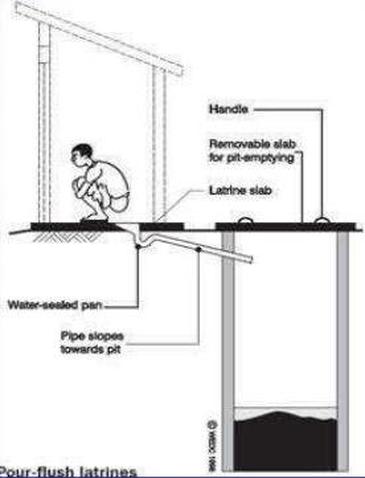
There were still a lot to do. We helped in making the first water-sealed toilet in the village. As the water source, lines of bamboo were connected together and placed at the water source higher in location and let in drain to collecting drums downstream. Whatever excesses the water spills over to a rivulet downstream and joins the bigger Saltan river.

Taken from http://toiletcrisis.weebly.com/water-sealed-latrine.html


We started to see patients in the clinic and started planning our community diagnosis. We met the village leaders, community workers, teachers and volunteers and told them that the survey is to determine their health needs and not for any other things. We planned with the community and set our deadlines. In a week’s time, we had our survey and then we came out of a community diagnosis.

 
Photo taken form Community Medblog Medchrome


Community Diagnosis (community assessment) is the foundation for improving and promoting the health of community members. The role of community assessment is to identify factors that affect the health of a population and determine the availability of resources within the community to adequately address these factors. Because of limited reach to medical services due to geography and terrain a lot of people are not reached by medical services. We studied their health indicators and we presented the findings to the community. We discussed the possible solutions and find what can be done? The community proposed to us a volunteer community health worker training. We were happy about this because it is a major strategy for increasing access to and coverage of basic health interventions.


We prepared a customized curriculum for the volunteers. Each Sitio of Gawaan had their own representatives. We had also a representative from Mabaca. The training was a once a week lecture that would culminate on October. The volunteers were assigned to assist us in our clinics too. 

Photo taken from https://www.doh.wa.gov/portals/1/images/8349/CHWT5.png

While we worked in the community, we were assimilated into their lives. We ate their food and lived their daily lives. We learned to eat sardines laced with a handful of siling labuyo. We learned to eat the eel (iwat or igat) which was caught at the Saltan river. And we loved most their own version of tinola made of native chicken. We learned to bathe in a tributary of the Saltan river and it was where we also was our clothes. We have learned the fear the great Saltan River. In one picnic along its bank, Chita attempted to swim across but she was carried downstream because of the rapid waters of the river.  It was good Chita was assisted downstream by a strong and mighty Gawaan lad. 

A collage of Kalinga food

When it was harvest time for coffee. We joined our family in going to their coffee farm. We were amazed how vast the coffee plantations were. For the people of Gawaan, coffee is a culture. They took extra care in planting their coffee seedlings. They have found out that the best species of coffee to be planted is the arabica species. They have a technique in planting. We noticed that they do not wait for all the coffee seeds to ripen. They harvest the mature green fruits. The coffee fruits were dried under the sun and were then placed on a crackle. When seeds come out, they are ready to be roasted. When roasted they are keep in a container cans to preserve the aroma. When they brew the coffee, the roasted seeds are pounded and eventually brewed. The Gawaan brew is reminiscent of the brewed coffee I tasted in Bologna, Italy. All of these processes were filled with diligence, dedication and laborious toil of the Gawaan worker. 


Photo taken from gmanetwork.com


Coffee is a cash crop. Once it had undergone the laborious process, the seeds are sold in Salegseg where a trader eventually takes it and sell in the capital city. In the present, there is now an increasing interest in the Kalinga coffee. Filipinos love coffee and I am sure that they would love the aroma and taste of the Kalinga coffee. I hope in the near future, a cafe like Figaro that utilizes Cavite coffee beans will be made and this time will only utilize the Kalinga coffee beans. 

Photo taken from uwsp.edu


When we went to the coffee farm, we noted the workers sporting long sleeves and long pants despite the warm and humid weather. This to protect themselves from the sun, insects and mosquitoes. Unfortunately, we had mosquito bites that made us wary about malaria. 

When we went to the farm we passed by the place of our midwife assistant - Lily. We met her brothers and sisters. We were warmly received by them in their home in the middle of the forest. One of Lily’s brothers asked us why we were with the “kakadwa” the other day. Since I am an Ilocano, I translated the word into “companion” and I told him we do not have any companions except the three of us. But he insisted that they saw us with the “kakadwa” that other day. How innocent of me when it dawned on us that they were referring to the NPA cadres. The word cadre was translated to kadwa or if many, kakadwa. We thought they were probably the men who had coffee in the house and were carrying rifles. We just told them, they just went to have coffee in the house but we never have a talk with them. 

My interaction with Lily’s brothers made me realized that we were being watched. I began to realize the risks of health workers volunteering in far-flung areas. They do not have to contend with the military alone but other armed forces in the community. Unintentionally, we began labeling people - red for the NPA kadwa, blue for the military, pink for the CPLA and white to the neutrals. We had to be very careful as we feel our lives were at stake. 


Note:
If the pictures are not attributed to a website or a person, it is mine. Those who own the pictures I have used and does not want to appear in this blog, please e-mail me at rqmallari60@gmail.com and I would be more than willing to remove them. Thank you.


Martes, Oktubre 17, 2017

THE STORY OF FIVE MONTHS - A PERSPECTIVE AFTER 31 YEARS (4)

Chapter 4
We've Only Just Begun

By conquering the bridge, have we conquered the war? No, the war was just about to start.  All of us have their own wars. We have our own demons to slay and the three doctors living in this faraway shall make a difference as a group and as individuals. But later on as we delved deeper into our volunteer work, there is a far greater war occurring in the hinterlands.

Our house for 5 months with the people whom we have worked with

We were hosted by the Nolagas family. They have a fairly big well-built house in the village. We were welcomed by our foster mother, Remy and her children. We were about to ask where is the father of the house when they told us that he was killed in front of the family by the People's Court of the New People's Army for the simple reason that he pushed for the passage of the cadastral survey of Balbalan land. Kalingas believe that the lands they have are ancestral lands and the concept of a cadastral survey means partitioning them and private property is enforced. They showed us the tomb in front of the house. It was but a fleeting reminder of the kind of justice revolutionaries would mete out on people who they thought are against their aims.


We were all silenced. I was silenced because of fear. Is this what the people in Tabuk are trying to tell us? Who would not be scared? I have imagined a newspaper headline “Three young doctors killed by the revolutionaries for being part of the bourgeoisie.” I trembled in fear. But I remembered Nelson Mandela’s words, “I learned that courage was not the absence of fear, but the triumph over it. The brave man is not he who does not feel afraid, but he who conquers that fear.”  I psyched myself that I will be able to go through this challenge. The other fear that confronted me most, however, was that will I be able to live up to the challenges ahead? I looked at my companions. I can’t read their faces. I said a prayer for the dead. I said a prayer for strength. I said a prayer for the success of this program.


The sound of the gongs awakened us.
Photo from musikocordillera.weebly.com

The house was a big building by Gawaan's standard. It was made of strong wood. We were billeted at the living room cum bedroom. There were three separate beds, one for each one of us. The kids were huddled into the other side of the house.  We selected our beds and we took our rest after the tiring trip and walk. Since there was no electricity in the area, darkness was countered by small kerosene lamps. We were provided with a Petromax to last for at least 3 hours until we have slept. Then we heard the sounds of the gongs. Initially it was soft, then it went crescendo and then went into plateau. The village chieftain, Manong Karyo, whom we have met at the Poblacion earlier came to us and told us to come to the village auditorium for the welcoming ceremony. 

The Taddok (Tadek)
Photo from the Igorotjournal.com

When we had arrived at the place, they started to dance the taddok (tadek in some). Taddok is the native dance of the Kalingas. They are performed during marriage festivities, fiestas, peace pact celebrations and when welcoming visitors. Generally Kalingas do the taddok to show how hospitable they are when welcoming visitors. They show their best to any visitor. Some girls took us to join the dance and we joined them.  Rocco and I followed the steps of the guys while Chita simulated the dance steps of the girls. Then we were invited to join them in partaking with the food prepared for us. They had butchered a carabao to welcome us. I was overwhelmed by the generosity and importance they gave us. I have read in a book that what was butchered will give importance to the visitor. If a carabao was butchered, they give high importance to you. For one, the carabao is very dear to the Kalingas. It is their animal in their farms. And since the animal is big, it could feed the whole village. Since the intention is to feed a greater number of the population it is the same way they regard you. The carabao is a cultural divide for me since I don't eat it! But staying in Kalinga, I have learned to eat the meat. I have experimented different recipes in order to muffle the perceive odor of the animal's meat. Eventually, I learned that what's best for us is to smoke the meat. 

The carabao is the most favored animal because it can feed a great number of people in the community
Photo from ugnayan.com


So dead tired that we didn't even had the time to reflect on what had happened to us. We were awakened in the morning by the aroma of boiled coffee. That distinctive whiff I can still remember. We were served rice, tapa (dried meat) and coffee for breakfast. We had our first visitors for the day - two men carrying rifles partaking Nanang's rich and fragrant Kalinga coffee. We were told that the coffee was home blend and harvested in their coffee plantations deep into the Balbalan forests and it was the arabica species. I had tasted different Arabica coffee already but Nanang's brew was simply superb. The men did not talk to us but we already had an impression of these people. 


The day was spent cleaning and preparing our clinic. There's a room next to the house that was converted as our clinic. We pulled out the boxes given to us by the health department - there was a variety of basic medications and some intravenous fluids inside. We were watched upon by the ogling eyes of the children of Gawaan as we continued to do our work. They would giggle and laugh at us. We smiled back and teased them too. We had finally confirmed our suspicion that it was Chita who was being called melicano. Before the day ended the clinic was ready to entertain patients. Our lives as part of the community had begun. 


Note:
Those who own the pictures I have used and does not want to appear in this blog, please e-mail me at rqmallari60@gmail.com and I would be more than willing to remove them. Thank you.

Miyerkules, Oktubre 11, 2017

THE STORY OF FIVE MONTHS - A PERSPECTIVE AFTER 31 YEARS (3)

Chapter 3
The “Melicano”


Photo from makkosadventures.wordpress.com


We really had no idea what Balbalan would be. We boarded a Ford Fiera with the big Red Cross on the sides and in front, a Red Cross flag was placed. I asked why too much signs were placed on our transportation, Dr. Olidan answered that on and off wars, the Red Cross is very well respected. It is as if that she was telling us that we were entering a war zone. It was at that point that mixed feelings set on us but it was too late to back out. I said a deep and silent personal prayer when I entered the fiera. The three of us gave a wry smile to each other. Back in 1986, the road from Tabuk to Balbalan was still rough, dusty and muddy at places where natural water falls occur. Our ambivalence was temporarily wiped out when we saw the grandeur of the Chico River. Macliing Dulag's death were still fresh among us and seeing the place that he fought for will give you an inkling why he died fighting for the Chico river.

Photo from philstar.com

As we traveled longer, we appreciated the lush greenery around. Every nook and turn there were waterfalls along the way. When we passed by the first military checkpoint in between Tabuk and Pasil, I was now reminded why we were told we were entering a war zone. When the soldiers saw Dr. Olidan, they let us pass as there was prior clearance for us to enter the area.


As we were approaching the junction, we were met by armed men ready to annihilate us. I was terrified. I don't know how Chita and Rocco reacted to the situation but I guess terrified was the term. The armed men made sure who we were. It was later explained that there was a tribal war between the Pasil tribe and the Lubuagan tribe. The Pasil tribesmen made sure that there was no one coming from Lubuagan in the group. Or else, he would be part of the "eye for an eye or a tooth for a tooth" law of the tribes. Now tribal wars were settled through the gun.

Picture taken Texan In the Philippines Blog

We stopped at the junction. One road turns to Pasil while the other road road turns to Lubuagan, Tinglayan and then towards Bontoc.  They replenished the water for the fiera, Some had refreshment at the junction store. We stayed inside the vehicle and Dr. Oliver narrated his experiences of community work in Balbalan. We intently listened to his story as it is a direct experience that we could make us of in living with the people. Then it dawned on me why we have to stop at the junction based on the story given us. I really didn't know if the reason of stopping by the junction is to collect enough courage after a terrifying feeling of being almost assaulted or just simply relieving yourself. Why did I say this? Well, because after the junction we were to enter a grey zone. No NPAs, CPLAs or tribal war occur in this area but unlawful elements were taking advantage of the situation. They stage hold-ups in the area. Were they scaring us? But what is this grey zone really? It is about 3 kilometers of mountain road going into a rain forest. If you had seen the secondary forest in Bohol being passed through by the road, this in Pasil is a natural forest. And what do you expect in a natural rain forest - wildlife. It is here I saw different colorful birds and with a wild rooster with long tail of feathers, flying and gliding from tree to tree, the ambivalence turns into certainty. The paradise we were looking for is slowly unfolding. At one turn, I saw small pigs running to and fro and waterfalls along the way. We were engulfed with majestic view that nature provided us. Then, as we got out of  the forest, we saw lines of orange trees. We were mesmerized but we were told that it was too early to feel like that. We were told to wait until we reached Balbalan. Our excitement was filling the brim. Along the way we saw the rapids of the Saltan river that eventually drains into the Chico river. We had our own love affair with the river but this is digressing from our straightforward narrative. 

Kalinga Children from Asiancorrespondent.com

As we entered the Balbalan boundary, our transportation moved to a slower gear. We passed by an elementary school and saw children that were just dismissed from their classes. Some children saw the fiera and run after the vehicle. Then we heard the children shouting "melicano, melicano, melicano!" They were saying, Americans, Americans, Americans. We were laughing as to who among us were Americans. We had our fair skin to boast but we suspect it was Chita they were referring to since she descended from a direct Hispanic heritage and her skin was the fairest among us. Our spirits were buoyed because of the children. 


Then after 4 to 5 hours of grueling ride in unpaved roads, we reached the Western Kalinga District Hospital. We were served our lunch in the hospital and at the hospital we met a batchmate doctor , Dr. KZ Tan, a homegrown doctor from Balbalan who would eventually land number 8 in the board examination for doctors that year. After our luncheon we were taken to Poblacion sometimes referred to as Salegseg but Salegseg refers to the tribe coming from Gawaan, Poblacion, Balantoy and Poswoy. We met our foster family and we were introduced to the leaders of the community. After these warm introduction, we were to embark on our life in Gawaan, a barrio of Balbalan for the next 5 months. 

The Gawaan Valley in Balbalan, Kalinga. Photo taken from the FB of Mr. Gerry Oribello

Gawaan is a valley. At the Poblacion view deck, you can see Gawaan village and the hanging bridge that spans the Saltan river. From Salegseg Poblacion, the walk down to the valley is about 45 minutes  while from Gawaan, since it is uphill climb and would take an inexperienced hiker more than an hour. We followed the foot path down to the valley. Before we reached the bridge, we will pass by Sitio Liglig. It is of note that whenever we pass by houses near the foot path, the house owner would invite the hiker and offer water and food to eat. I began to understand later on because the walk was long and you needed to replenish lost water and energy. After Liglig, comes the hanging bridge that connects the two sides of the Saltan river.

Photo  from Notey.com

The bridge frightened me and it was too cumbersome to walk through it. The fear of heights and the spaces between the slats on the bridge floor greatly frightened me! The children who were following us were giggling and laughing and they overtook us and ran through the whole stretch of the bridge. Doing that frightened me more because the bridge would be shaken and jarred. It was too late to quit. I have come too far and what better way to succeed but to conquer the hanging bridge. 


(P.S.: If the pictures are not attributed to a website or a person, it is mine. Those who own the pictures I have used and does not want to appear in this blog, please e-mail me at rqmallari60@gmail.com and I would be more than willing to remove them. Thank you.)

ARINGAY TOURISM WEBSITE TESTING

We are presently testing the Aringay Tourism Website. Please visit and we appreciate your comments. https://aringaytourism.site123.me